

Oil Analysis Lab Services
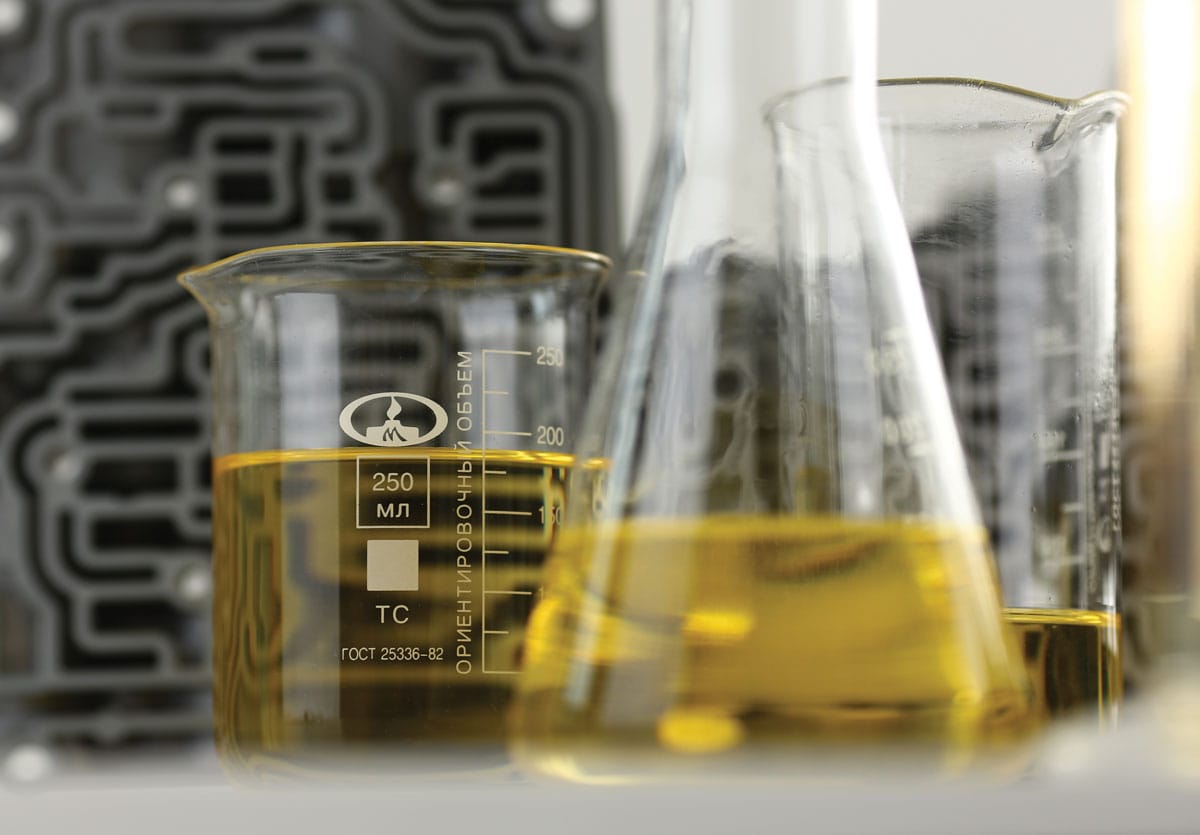
For over 40 years, the U.S. Lubricants’ OilChek® Oil Analysis Program has provided high quality, state-of-the-art analyses of lubricating oil, fuel, coolant and industrial products. The highly automated program provides a thorough examination of your lubricating system complete with written recommendations. Our experienced technicians use the best testing equipment available to generate quality data in identifying the best reliability practices, increased production and operation cost reduction.
We offer support and provide resources for the development, design and research of manufactured equipment, assuring machine health. With our OilChek® services, customers benefit from our state-of-art equipment, qualified team, and 360° Customer Care® to help them deliver maximum performance.
Our high-tech ISO 9001:2015 certified lab meets the requirements requested by most customers that depend on a superior level of accuracy.
Fuel Analysis
Oil & Lubricants Analysis
Water-Based Fluid Analysis
Root-Cause Failure Elimination
Special Projects
We understand the need to exceed your expectations, reduce your costs, and have equipment running at optimal performance. Our OilChek® service is designed to detect critical fuel performance characteristics.
Regular maintenance is important for your operation to avoid unnecessary costs and extend the useful life of the lubricant. With our Oil Analysis services, we have superior predictive capabilities for engine, hydraulic, transmission, and gear oil to identify issues before they form permanent damage.
We perform analyses to extend the bath-life of process fluids to help your operators continue to work in a safe environment.
In the event you have a failure, our engineering and technical staff will consult with you on an optimal solution based on data collection to resolve the issue. We strive to identify any change in sample data to help reduce the potential of a failure.
If you are in need of a customized analysis, we would love the challenge. Let our OilChek® analysts answer your questions Assuring Machine Health® for the long-term.
